
- Apr 21
- 3 min read
The Cerulean Sweater Effect
How One Piece Changes Everything
by Forza Digital
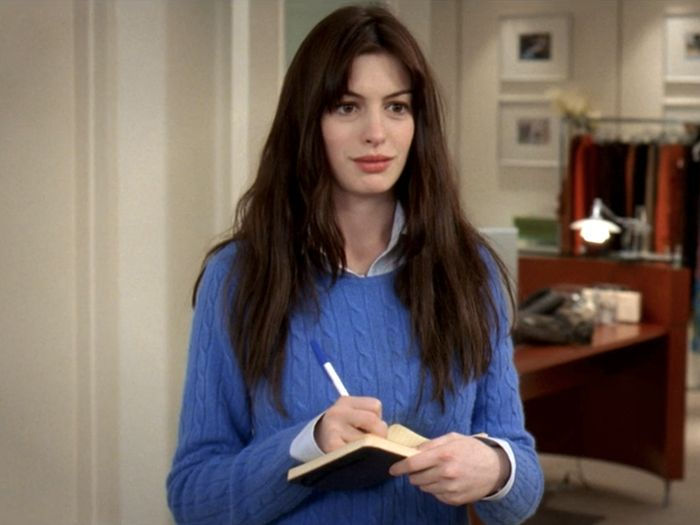
It was never really about the sweater.
The Devil Wears Prada 2 press tour has taken over the internet this week, which means the cerulean speech has made its rounds again. Twenty years later, Miranda Priestly explaining the invisible thread between a decision made in a boardroom and a sweater pulled from a sale bin still hits. Not because of the fashion industry lesson, though that part holds up too. But because she's right about something that has nothing to do with "Runway" magazine: the things you put on your body are rarely just things.
There is a reason you feel different on the days you get dressed versus the days you don't. Researchers at Northwestern University coined the term "enclothed cognition" over a decade ago to describe the systematic influence clothing has on the wearer's psychological state. What you wear changes how you think, how you carry yourself, how you move through a room. The sweater is never just a sweater. It is a signal you send to yourself before you send it to anyone else.
The piece that does something
Everyone who has a real relationship with getting dressed has a favorite item. Sure it probably rotates, but it's generally the piece that you gravitate towards, look forward to wearing, and feel your best in. It is the thing you reach for when you need to feel like a version of yourself that is running on all cylinders. It could be a jacket. It could be a very specific pair of jeans. A t-shirt. For a lot of people it is a shoe. Whatever it is, you know it when you put it on because something shifts almost immediately.
This is not mysticism or mythology, it is psychology. The clothes we wear activate the meaning we have attached to them, and that meaning shapes our behavior. In 2012, researchers at Northwestern published a study on exactly this. Participants who wore a physician's white lab coat performed significantly better on attention tasks than those who wore the same coat but were told it was a painter's. Same garment, completely different psychological effect. It is not the clothing itself. It is what the clothing means to you when you put it on.
What Andy Sachs actually figured out
The arc of the original film was framed as a moral cautionary tale about selling out, but there was always a more interesting read in the mix. Maybe, Andy did not become a different person when she started dressing well. She just became a more capable version of the person she already was. The confidence was not manufactured, it was unlocked. The clothes were the key, not the transformation.
The practical version of this
Getting dressed intentionally does not require a fashion budget or a stylist. It requires identifying the pieces that actually do something for you and making sure they are accessible on the days when you need them most. This means knowing your favorites and wearing them. It means not saving them for a special occasion that may or may not materialize. It means understanding that how you show up physically in the world is a form of communication, and you are the one writing the message.
The Miranda Priestly speech was meant to be humbling. But re-watch it as an invitation instead. You are already participating in the culture of getting dressed. You might as well be intentional about it.



Comments